Module 1
Communication Foundations
Before you can improve communication, you need a shared model of how it works — and a clear picture of where it breaks down.
الوحدة ١
أساسيات التواصل
قبل أن تُحسّن تواصلك، تحتاج إلى نموذج مشترك لكيفية عمله — وصورة واضحة لمواضع تعطّله.
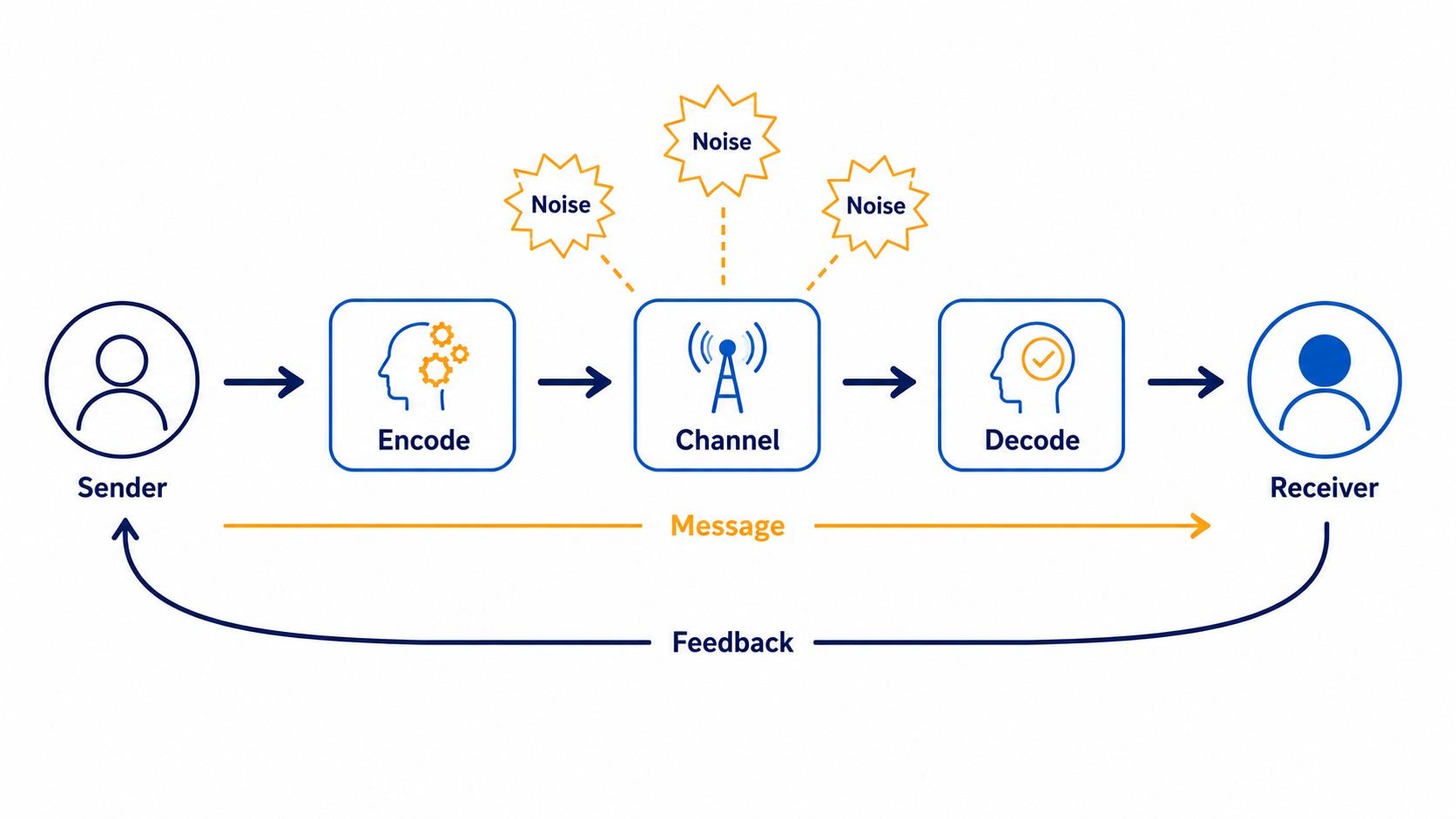
Every message travels the same path. You (the sender) have an idea, you encode it into words and tone, it travels through a channel (a call, an email, a WhatsApp), the other person decodes it, and becomes the receiver. Two things constantly interfere:
- Noise — distractions, stress, jargon, a bad line, a busy clinic — anything that distorts the signal.
- Feedback — the receiver's reaction that tells you whether the message actually landed.
The single most important idea: meaning is decoded by the receiver, not delivered by the sender. Your intention doesn't travel — only your words, tone and signals do. So clarity is your job, not the listener's.
كل رسالة تسلك المسار نفسه. أنت (المُرسِل) لديك فكرة، ثم ترمّزها إلى كلمات ونبرة، فتنتقل عبر قناة (مكالمة، بريد، رسالة واتساب)، ثم يفكّها الطرف الآخر ليصبح المُستقبِل. وهناك أمران يتداخلان باستمرار:
- التشويش — المشتتات، والضغط، والمصطلحات، وضعف الاتصال، وازدحام العيادة — أي شيء يشوّه الإشارة.
- التغذية الراجعة — رد فعل المُستقبِل الذي يخبرك هل وصلت الرسالة فعلًا.
أهم فكرة على الإطلاق: المعنى يُفكّه المُستقبِل، ولا يسلّمه المُرسِل. نيّتك لا تنتقل — بل تنتقل كلماتك ونبرتك وإشاراتك فقط. لذا فإن الوضوح مسؤوليتك أنت، لا مسؤولية المستمع.
Why this matters for you
A doctor decodes your message through their pressure, priorities and past experience — not your intent. Between departments, the fastest way to prevent rework is to close the loop: confirm the other person decoded what you meant.
لماذا يهمّك هذا
الطبيب يفكّ رسالتك عبر ضغطه وأولوياته وخبرته السابقة — لا عبر نيّتك. وبين الأقسام، أسرع طريقة لمنع إعادة العمل هي إغلاق الحلقة: تأكّد أن الطرف الآخر فكّ ما قصدته.
Communication isn't a “soft” extra — it moves money, safety and careers. The cost of getting it wrong is measurable, and in healthcare the stakes are human. The good news from the same research: these are trainable behaviours, and organisations that build them consistently outperform those that don't.4
التواصل ليس إضافة «هامشية» — إنه يحرّك المال والسلامة والمسارات المهنية. تكلفة الخطأ فيه قابلة للقياس، وفي الرعاية الصحية تكون المخاطر إنسانية. والخبر الجيد من الأبحاث نفسها: هذه سلوكيات قابلة للتدريب، والمؤسسات التي تبنيها باستمرار تتفوّق على غيرها.4
Business scenarioسيناريو عملي
The “obvious to me” shipment
Regulatory sends logistics a one-line message: “Ship the units once approval is through.” To Regulatory, “approval” meant the final MoH release; to logistics it meant the internal QA sign-off they'd already seen. Units shipped early, cleared customs against the wrong document, and sat impounded for nine days — a delayed installation and an irritated hospital. No one was careless; the message simply assumed shared context that wasn't there. One confirming question — “which approval, and what's the reference number?” — would have prevented all of it.
الشحنة «الواضحة بالنسبة لي»
أرسل قسم الشؤون التنظيمية إلى اللوجستيات رسالة من سطر واحد: «اشحن الوحدات بمجرد صدور الموافقة». بالنسبة للتنظيمية كانت «الموافقة» تعني الإفراج النهائي من وزارة الصحة؛ أما اللوجستيات ففهمتها كموافقة الجودة الداخلية التي رأتها بالفعل. شُحنت الوحدات مبكرًا، وخُلّصت جمركيًا بالمستند الخطأ، وبقيت محتجزة تسعة أيام — تأخّر التركيب وانزعج المستشفى. لم يكن أحد مهملًا؛ الرسالة ببساطة افترضت سياقًا مشتركًا لم يكن موجودًا. سؤال تأكيدي واحد — «أي موافقة، وما رقمها المرجعي؟» — كان سيمنع ذلك كله.
Success storyقصة نجاح
Closing the loop, on purpose
Borrowing a habit from aviation and surgical teams — the “read-back” — one field team started confirming every critical instruction by repeating it back in their own words before acting. It felt slightly awkward for a week. Within a quarter, rework on device bookings and demo scheduling dropped noticeably, and the running “who said what” disputes on WhatsApp mostly disappeared. The fix cost nothing but a few extra seconds per message.
إغلاق الحلقة عن قصد
باستعارة عادة من فرق الطيران والجراحة — «إعادة القول» — بدأ أحد الفرق الميدانية بتأكيد كل تعليمات حرجة عبر إعادتها بكلماته قبل التنفيذ. بدا الأمر محرجًا قليلًا لأسبوع. وخلال ربع سنة انخفض إعادة العمل في حجوزات الأجهزة وجدولة العروض بشكل ملحوظ، واختفت تقريبًا نزاعات «من قال ماذا» على واتساب. لم يكلّف الحل سوى ثوانٍ إضافية قليلة لكل رسالة.