Activities & Exercises
Skills fade without practice. Use these between sessions — some for the team in a short huddle, some to do on your own.
الأنشطة والتمارين
المهارات تتلاشى دون تدريب. استخدم هذه بين الجلسات — بعضها للفريق في لقاء قصير، وبعضها لتؤدّيه بمفردك.
Team activitiesأنشطة جماعية
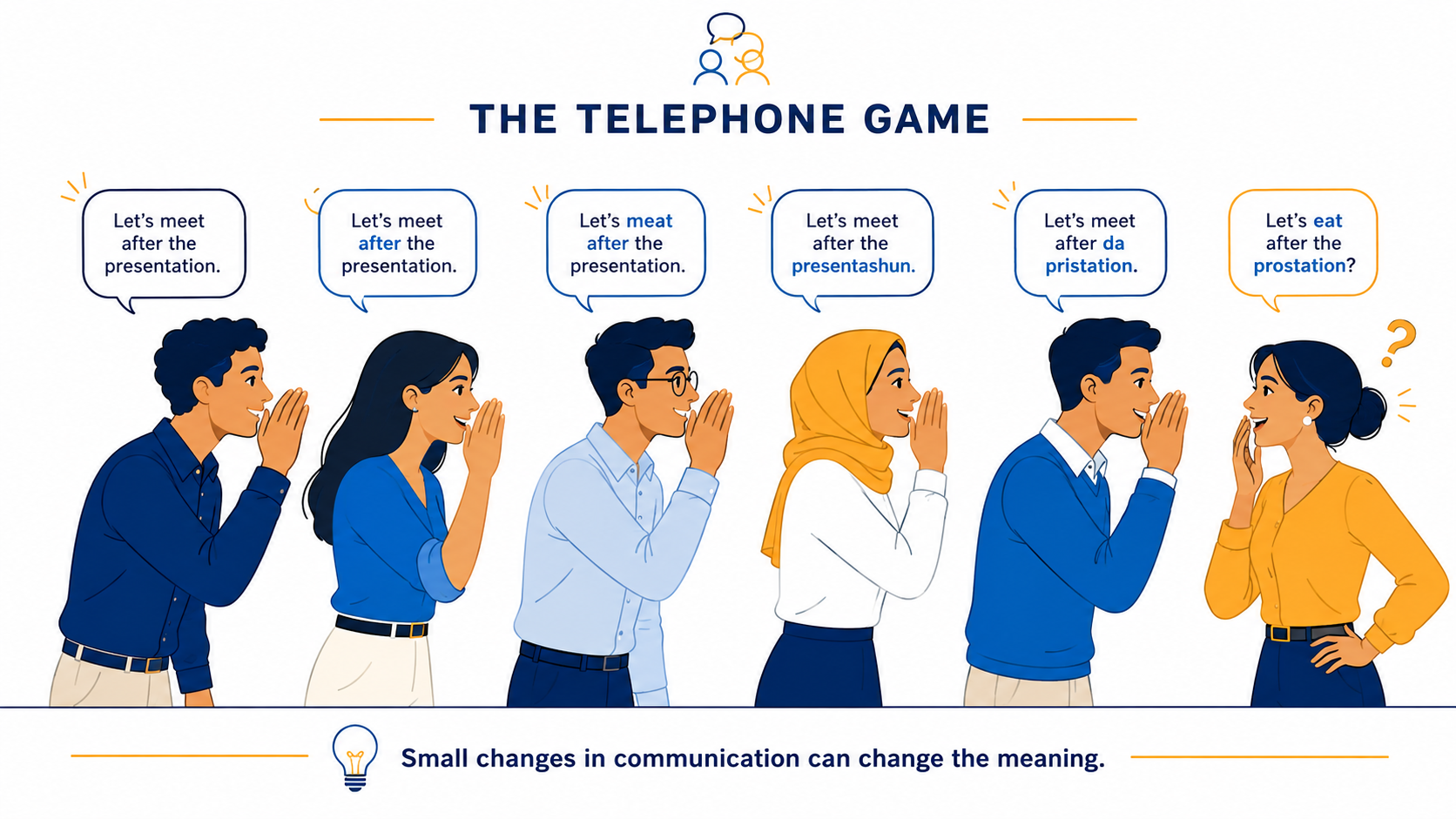
Pass It On
4–10 people · 10 min · no materials
Whisper a detailed work instruction to the first person (e.g. “Tell Dr. Ahmed the demo moved to Thursday 2pm and to bring the calibration sheet”). Each person whispers it once to the next; the last says it aloud. Round 2: allow one clarifying question per person. Debrief: what did feedback change?
مرّرها
٤–١٠ أشخاص · ١٠ دقائق · بلا أدوات
اهمس بتعليمات عمل مفصّلة للشخص الأول (مثال: «أخبر د. أحمد أن العرض انتقل إلى الخميس ٢ ظهرًا وأن يُحضر ورقة المعايرة»). يهمس كل شخص بها مرة للتالي؛ ويقولها الأخير بصوت عالٍ. الجولة الثانية: اسمح بسؤال توضيحي واحد لكل شخص. المناقشة: ما الذي غيّرته التغذية الراجعة؟
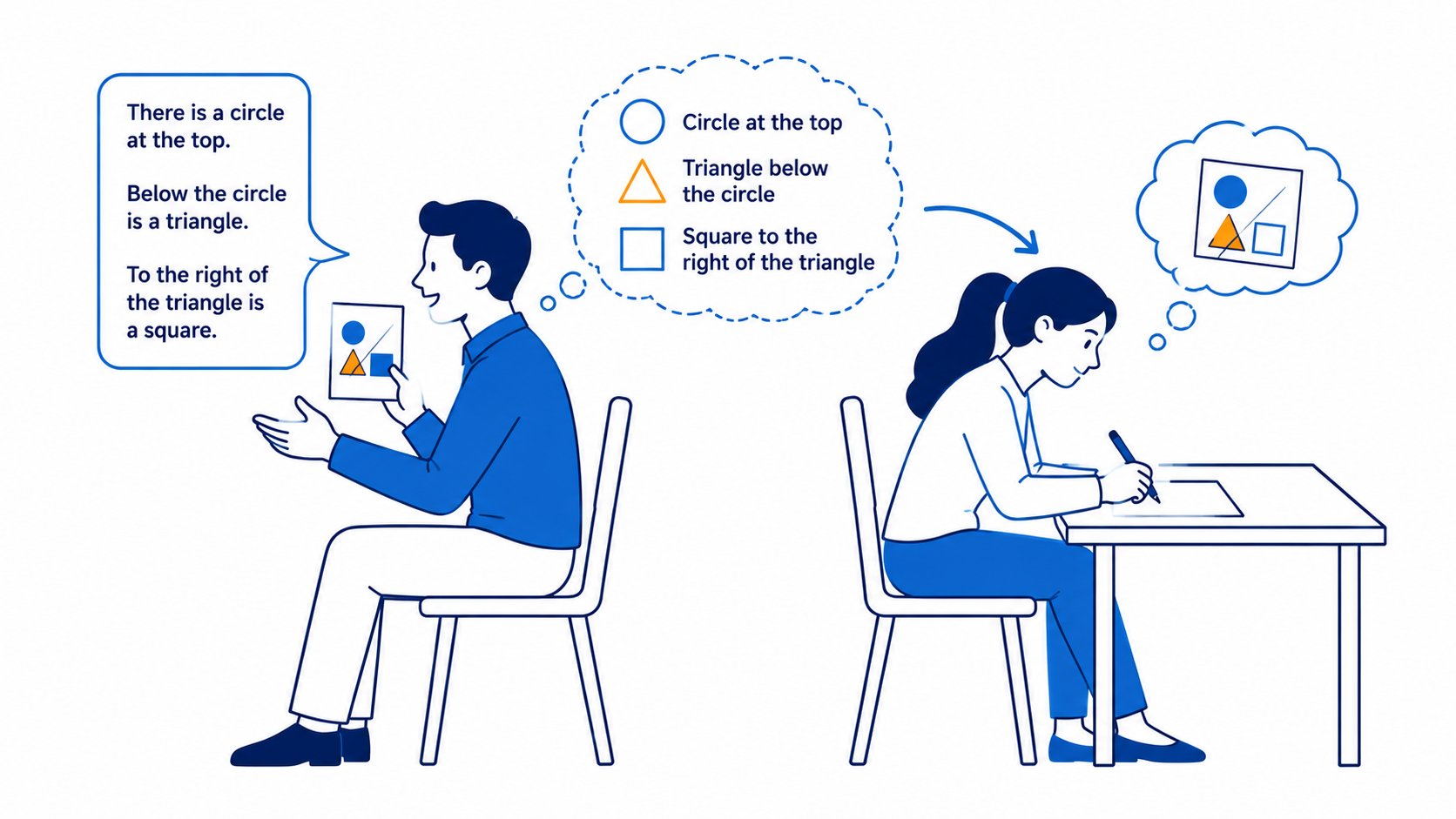
Shape-Drawing Challenge
2 teams · 20 min · printed shapes + paper
One “drawer” per team reproduces a hidden shape from the team's verbal description. Round 1: no questions allowed (one-way). Round 2: questions allowed (two-way). Compare accuracy. Debrief: what made descriptions clear, and where do we “send and assume” at work?
تحدّي رسم الأشكال
فريقان · ٢٠ دقيقة · أشكال مطبوعة + ورق
«راسم» واحد لكل فريق يعيد رسم شكل مخفي من وصف فريقه الشفهي. الجولة الأولى: لا أسئلة (اتجاه واحد). الجولة الثانية: الأسئلة مسموحة (اتجاهان). قارِن الدقة. المناقشة: ما الذي جعل الوصف واضحًا، وأين «نرسل ونفترض» في العمل؟
Talker · Listener · Observer
Groups of 3 · 15 min · a checklist
Rotate three roles. The Talker speaks 2 minutes about a real, recent customer or doctor interaction. The Listener uses active-listening behaviours only — no advice. The Observer scores against the five behaviours and gives 30 seconds of feedback. Rotate until everyone has played each role.
المتحدث · المُنصِت · المُلاحِظ
مجموعات من ٣ · ١٥ دقيقة · قائمة تحقّق
تبادلوا الأدوار الثلاثة. يتحدث «المتحدث» دقيقتين عن تفاعل حقيقي حديث مع عميل أو طبيب. يستخدم «المُنصِت» سلوكيات الإنصات فقط — بلا نصائح. يقيّم «المُلاحِظ» وفق السلوكيات الخمسة ويعطي ٣٠ ثانية من الملاحظات. تبادلوا حتى يؤدي الجميع كل دور.
Fix This Message
Small groups · 15 min · 2–3 real messages
Take 2–3 genuine (anonymised) vague messages. Each group rewrites them to the 7 Cs and the team standard, then reads both versions aloud. Vote on the clearest rewrite.
أصلِح هذه الرسالة
مجموعات صغيرة · ١٥ دقيقة · ٢–٣ رسائل حقيقية
خذوا ٢–٣ رسائل غامضة حقيقية (مُجهّلة). تعيد كل مجموعة صياغتها وفق الـ7 Cs ومعيار الفريق، ثم تقرأ النسختين بصوت عالٍ. صوّتوا على أوضح إعادة صياغة.
Individual practiceتدريب فردي
The one-question rule
This week · in real conversations
In every important conversation, ask one more open question than feels necessary before you respond. Notice what you learn that you would have missed.
قاعدة السؤال الإضافي
هذا الأسبوع · في محادثات حقيقية
في كل محادثة مهمة، اطرح سؤالًا مفتوحًا إضافيًا أكثر مما تظن قبل أن تردّ. لاحظ ما تتعلّمه مما كنت ستفوّته.
Paraphrase before you reply
Daily · 5 conversations
Before responding, summarise what you heard in one line: “So what matters to you is…”. Let the other person confirm or correct. Track how often you were slightly off.
أعد الصياغة قبل الرد
يوميًا · ٥ محادثات
قبل الرد، لخّص ما سمعته في سطر واحد: «إذًا ما يهمّك هو…». دع الطرف الآخر يؤكّد أو يصحّح. سجّل كم مرة كنت مخطئًا قليلًا.
Style-spotting
Ongoing · your key contacts
Pick three doctors or colleagues. Guess each one's DISC style, then plan one change to your pace, detail or warmth for your next conversation with them. Review what worked.
اقتناص الأسلوب
مستمر · جهات اتصالك الأساسية
اختر ثلاثة أطباء أو زملاء. خمّن أسلوب DISC لكل منهم، ثم خطّط لتغيير واحد في إيقاعك أو تفاصيلك أو دفئك في محادثتك التالية معهم. راجع ما نجح.
Read it as the receiver
Every important message · before sending
Before you send an email or WhatsApp that asks for something, re-read it once as the receiver. Is the ask in the first line? Is anything vague? Then send.
اقرأها كأنك المُستقبِل
كل رسالة مهمة · قبل الإرسال
قبل إرسال بريد أو رسالة واتساب تطلب شيئًا، أعد قراءتها مرة كأنك المُستقبِل. هل الطلب في السطر الأول؟ هل هناك أي غموض؟ ثم أرسِل.