Module 3
DISC Communication Styles
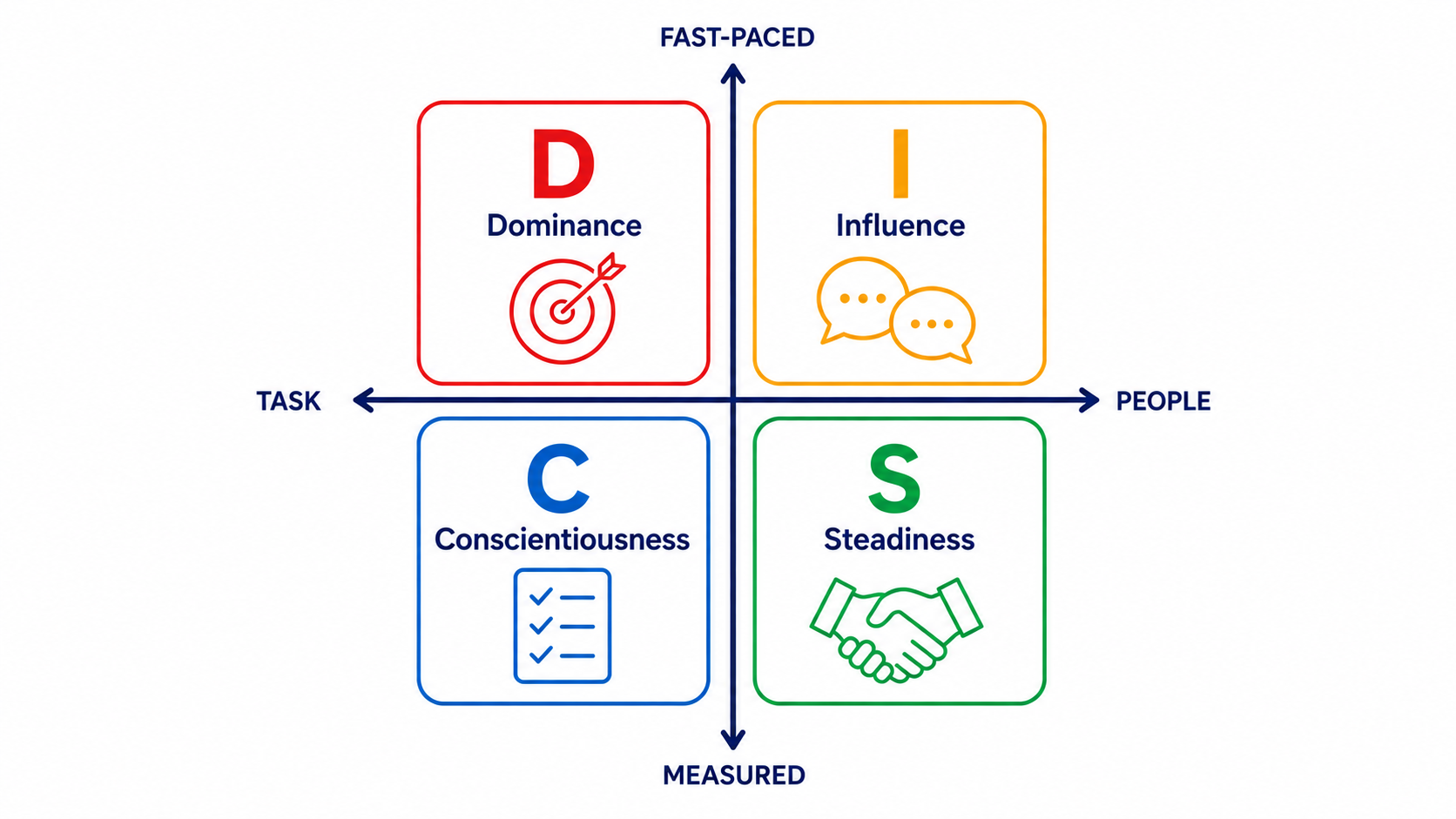
DISC is a simple map of four communication styles. It isn't a box that limits you — it's a tool to read the person in front of you and adapt how you say things.
الوحدة ٣
أساليب التواصل DISC
DISC خريطة بسيطة لأربعة أساليب تواصل. ليست قالبًا يحدّك — بل أداة لقراءة الشخص أمامك وتكييف طريقة قولك للأشياء.
The one habit that matters
Before an important conversation, ask: “What's this person's likely style — and what do they need from me?” Then change one thing: your pace, your level of detail, or your warmth.
العادة الوحيدة المهمة
قبل أي محادثة مهمة، اسأل: «ما أسلوب هذا الشخص المحتمل — وما الذي يحتاجه مني؟» ثم غيّر شيئًا واحدًا: إيقاعك، أو مستوى تفاصيلك، أو دفئك.
DISC began with Harvard psychologist William Moulton Marston in his 1928 book Emotions of Normal People. His key insight still matters most: the four styles are dynamic and situational — people shift as their environment changes.8 That's precisely why you can flex: style is a set of behaviours you choose, not a cage. Marston never sold a test, which is why many versions exist; the value isn't the label, it's the habit of reading the person and adapting.
بدأ DISC مع عالم النفس بجامعة هارفارد ويليام مولتون مارستون في كتابه عام 1928 مشاعر الأشخاص الطبيعيين. وتبقى فكرته الجوهرية هي الأهم: الأساليب الأربعة ديناميكية وموقفية — يتغيّر الناس بتغيّر بيئتهم.8 ولهذا بالضبط يمكنك التكيّف: الأسلوب مجموعة سلوكيات تختارها، لا قفص. لم يبِع مارستون اختبارًا قط، ولهذا توجد نسخ كثيرة؛ والقيمة ليست في التصنيف بل في عادة قراءة الشخص والتكيّف معه.
Business scenarioسيناريو عملي
Same pitch, two very different people
A rep prepared one polished pitch for a tender and used it on both decision-makers. The procurement head (a C style) wanted specifications, warranty terms and a risk table — and felt rushed by the enthusiastic, big-picture delivery. The head of department (a D style) wanted the bottom line in 60 seconds — and felt drowned in detail. Same content, wrong packaging, twice. On the revisit the rep flexed: a one-page data pack for the C, a three-bullet outcomes summary for the D. Both said yes. The facts never changed — the delivery did.
العرض نفسه، وشخصان مختلفان تمامًا
أعدّ مندوب عرضًا واحدًا مصقولًا لمناقصة واستخدمه مع كِلا صاحبي القرار. أراد مدير المشتريات (أسلوب C) المواصفات وشروط الضمان وجدول المخاطر — وشعر بأن العرض الحماسي العام يستعجله. أما رئيس القسم (أسلوب D) فأراد الخلاصة في 60 ثانية — وشعر بأنه غارق في التفاصيل. المحتوى نفسه، والتغليف الخطأ، مرتين. في الزيارة التالية تكيّف المندوب: ورقة بيانات من صفحة لِـ C، وملخّص نتائج من ثلاث نقاط لِـ D. فوافق الاثنان. لم تتغيّر الحقائق — تغيّر الأسلوب.
Success storyقصة نجاح
Managing up by style
A team member kept clashing with a fast, direct manager (a strong D). Their careful, detailed updates read as “slow” to him; his terse replies read as “cold” to them. After mapping the style gap, they changed one habit: lead every update with the headline and the decision needed, then offer detail on request. Friction dropped, and within two review cycles they were trusted with a bigger territory. Nothing changed about their competence — only how it was communicated upward.
إدارة العلاقة مع المدير حسب الأسلوب
ظلّ أحد أعضاء الفريق يصطدم بمدير سريع ومباشر (أسلوب D قوي). بدت تحديثاتهم الدقيقة المفصّلة «بطيئة» له، وبدت ردوده المقتضبة «باردة» لهم. بعد رسم فجوة الأسلوب، غيّروا عادة واحدة: بدء كل تحديث بالعنوان الرئيسي والقرار المطلوب، ثم تقديم التفاصيل عند الطلب. انخفض الاحتكاك، وخلال دورتَي تقييم أُسندت إليهم منطقة أكبر. لم تتغيّر كفاءتهم — بل طريقة إيصالها إلى الأعلى فقط.